
Shylight, Studio DRIFT
Images care of @studio.drift
What if manmade objects could feel?
Much of “green” architecture prioritizes the material and functional properties of sustainability, through low-carbon, bio-based, non-toxic and locally sourced materials and highly efficient mechanical systems. But beyond form and function, what if we also foregrounded the feeling sense of sustainability? How might we design space differently?
Linneke Gordijn and Ralph Nauta, the creative minds behind @studio.drift provide us with inspiration. When asked about their work, they emphasize how “man-made objects tend to have a static form, while everything natural in this world, including people, are subject to constant metamorphosis and adaptation to their surroundings.”
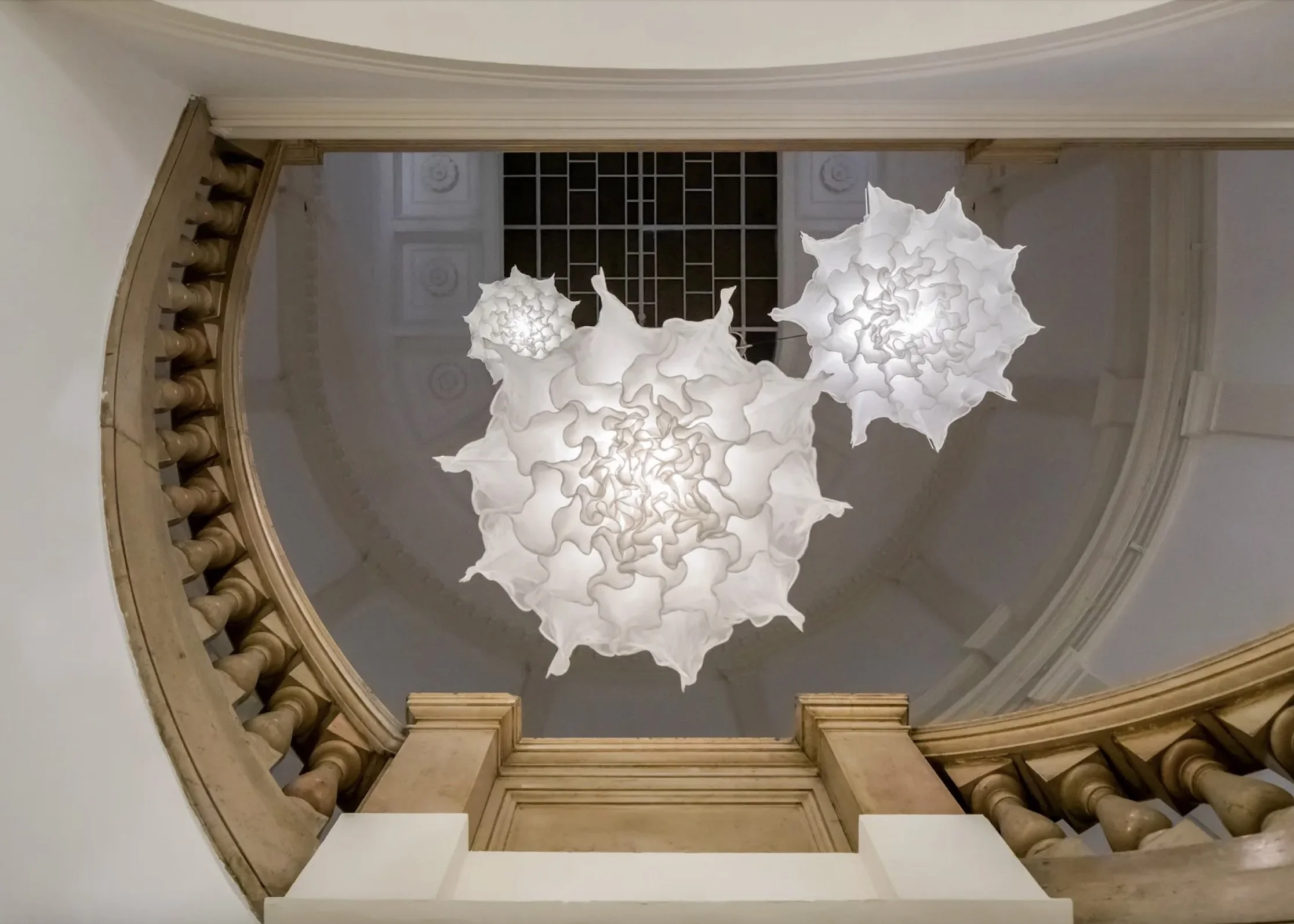
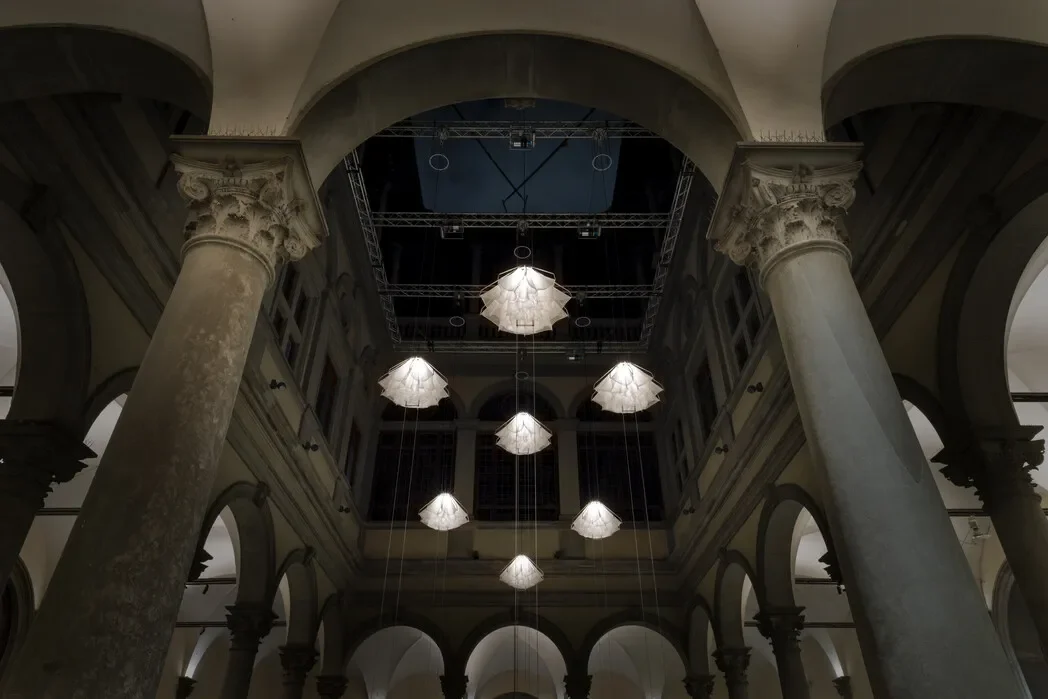
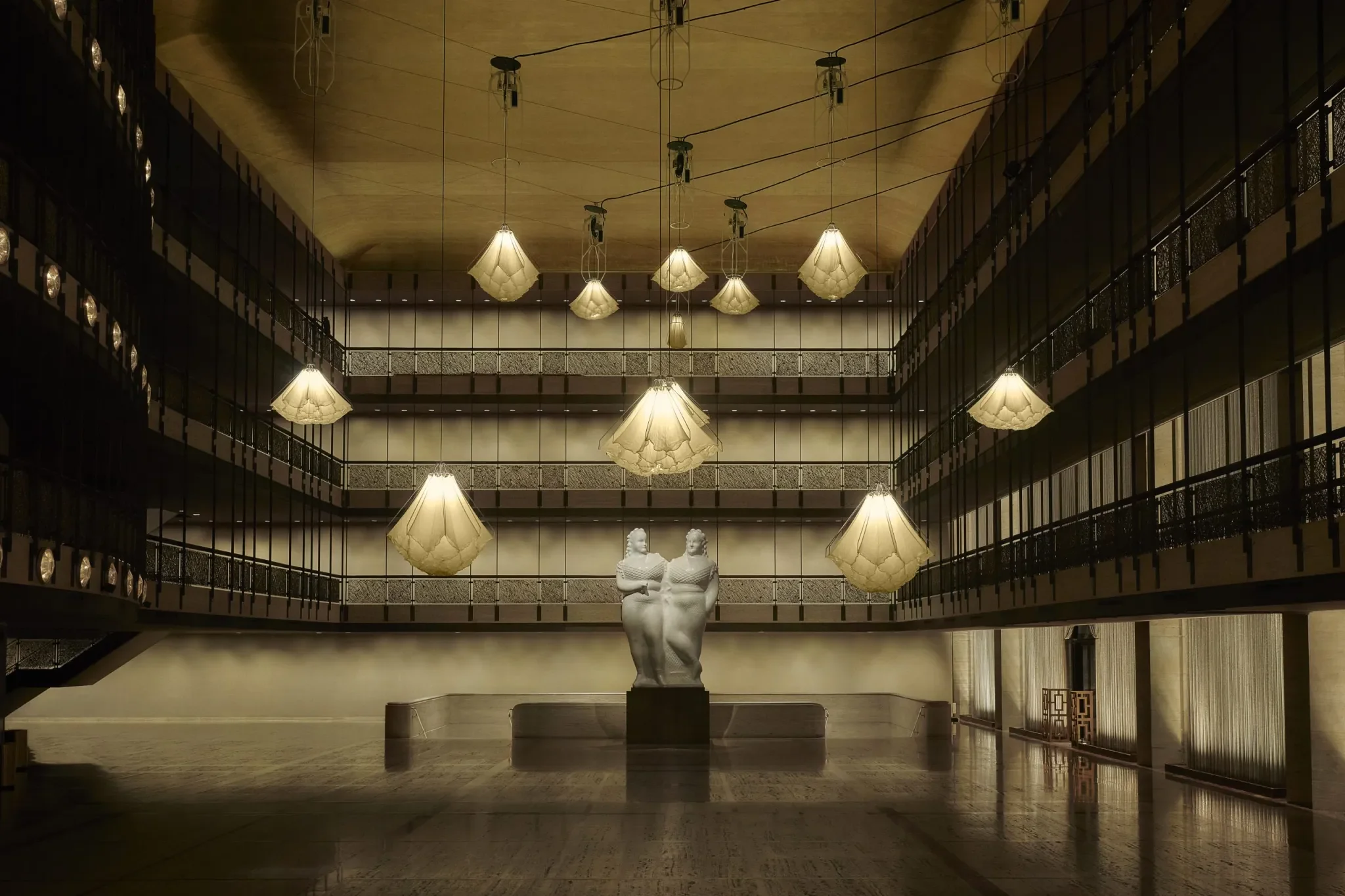
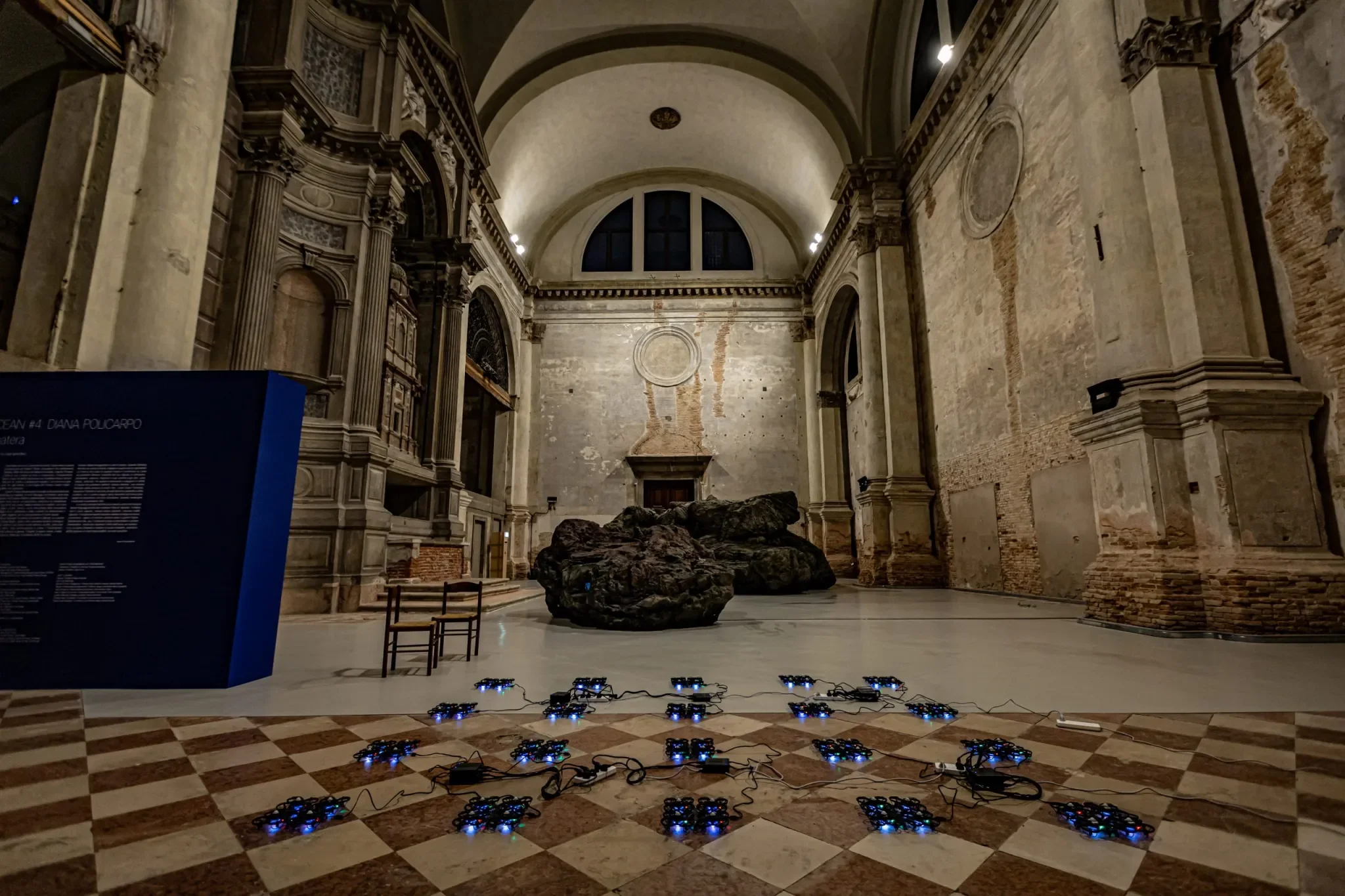
Shylight, a kinetic installation of light and movement mimics the natural process of flowers opening and closing to help us sense the cyclical rhythms of a day. In 20 Steps, the movement of a skeletal sculpture is tuned to align our varied heartbeats and breathing in space. Social Sacrifice, an indoor drone performance recently presented at @labiennale, translates the emergent synchronicity of schools of fish facing a predator to invite wonder toward our collective intelligence. By working with an embodied approach to technology, @studio.drift explores how we can design our built environment to be in deeper conversation with the living world.
Images care of @studio.drift
Stirring the Senses
Each of these works ground us in the sensory capacities of our bodies to feel our interdependence with the aliveness around us. Shylight is an object that feels alive because of unpredictable, natural-looking movements: it descends while blossoming in all its glorious beauty, only to subsequently close and retreat upward again with the grace of a dancer. It is a subtle choreography of sensuality and wonder. We understand the world not as static object, but as living organism with flows to connect to and care for.
Images care of @studio.drift
How It Move Us, Forward
DRIFT manifests the phenomena and hidden properties of nature with the use of technology in order to learn from the Earth’s signals and flows of aliveness, and to re-establish our connection to it. With both depth and simplicity, DRIFT’s artworks illuminate parallels between man-made and natural structures. As architects and designers tackle the challenges of our time, we hope @studio.drift serves as a model for creating infrastructure that is not only built in sustainable ways but encourages us to adopt a fundamentally more interdependent and life-giving approach to building with the natural world.
Images care of @studio.drift
Studio DRIFT
Dutch artists Lonneke Gordijn (1980) and Ralph Nauta (1978) founded studio DRIFT in 2007. With a multidisciplinary team of 45, they work on experiential sculptures, installations and performances. DRIFT manifests the phenomena and hidden properties of nature with the use of technology in order to learn from the Earth’s underlying mechanisms, and to re-establish our connection to it. With both depth and simplicity, DRIFT’s artworks illuminate parallels between man-made and natural structures through deconstructive, interactive, and innovative processes. The artists raise fundamental questions about what life is and explore a positive scenario for the future.