
Climate Chronograph, Terrene
Images courtesy Terrene, see terrene.co for credits.
What if we could witness the climate debate in the irrefutable daily language of the land and sea?
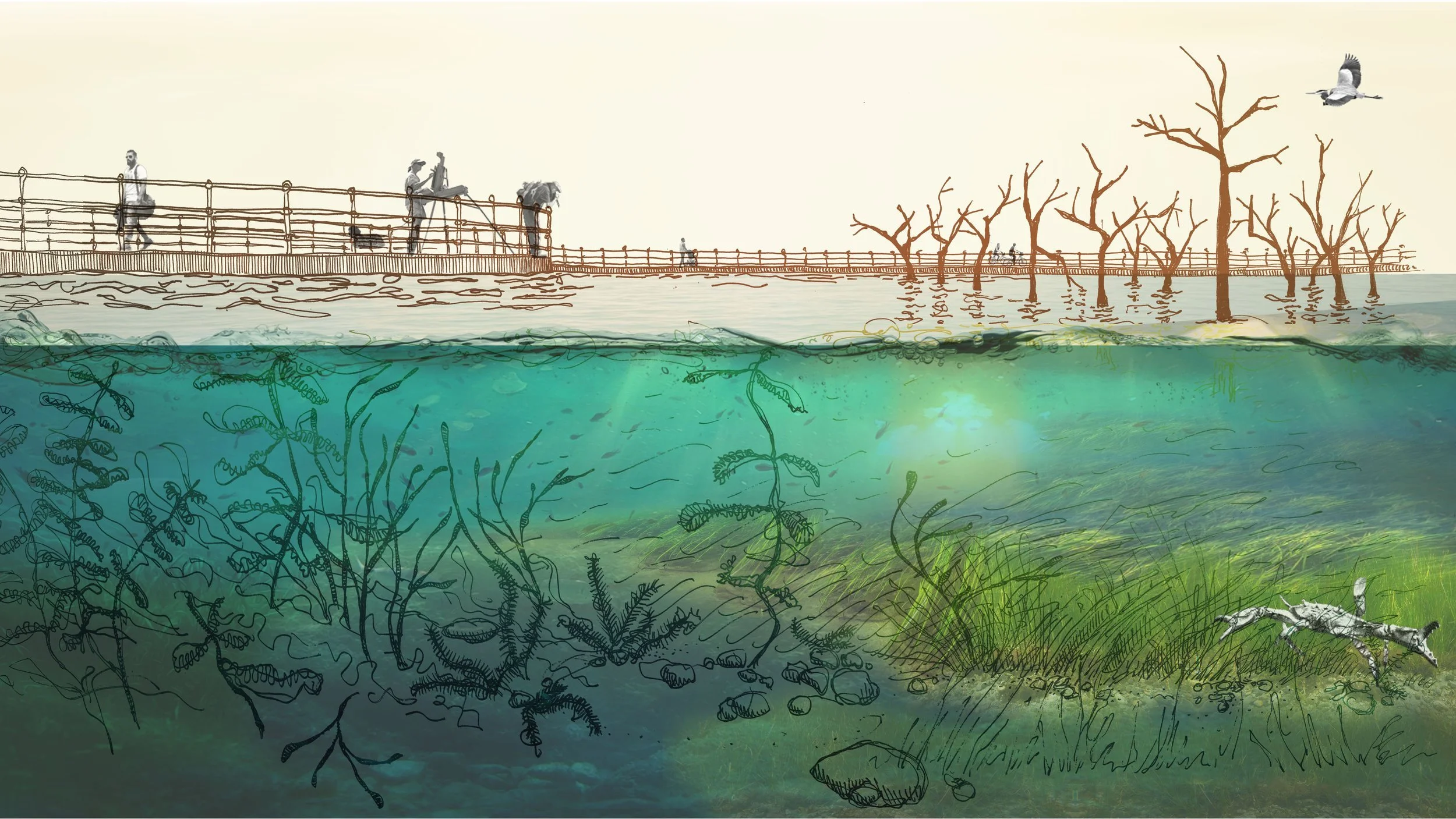
We’ve loved Climate Chronograph ever since it won the Memorials for the Future competition in 2016. The competition, created by @nationalparkservice, @ncpcgov and New York’s @van_alen, called for new approaches to designing memorials for collective memory. With Climate Chronograph, Erik Jensen and Rebecca Sunter envision a forward-looking memorial to future landscapes lost to rising seas. In so doing they take a complex global process—climate change—and turn it into a tangible, personal and bodied experience.
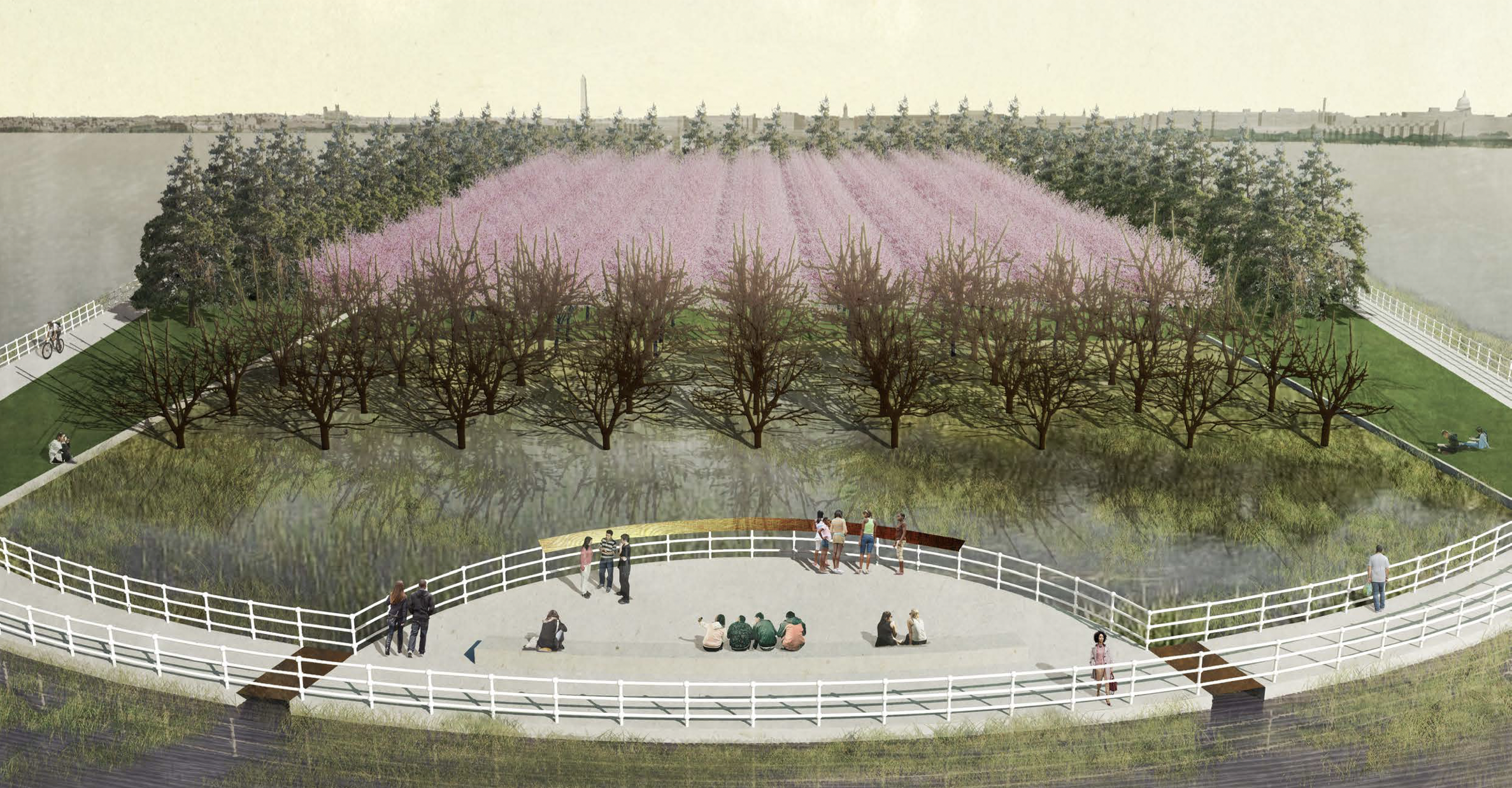
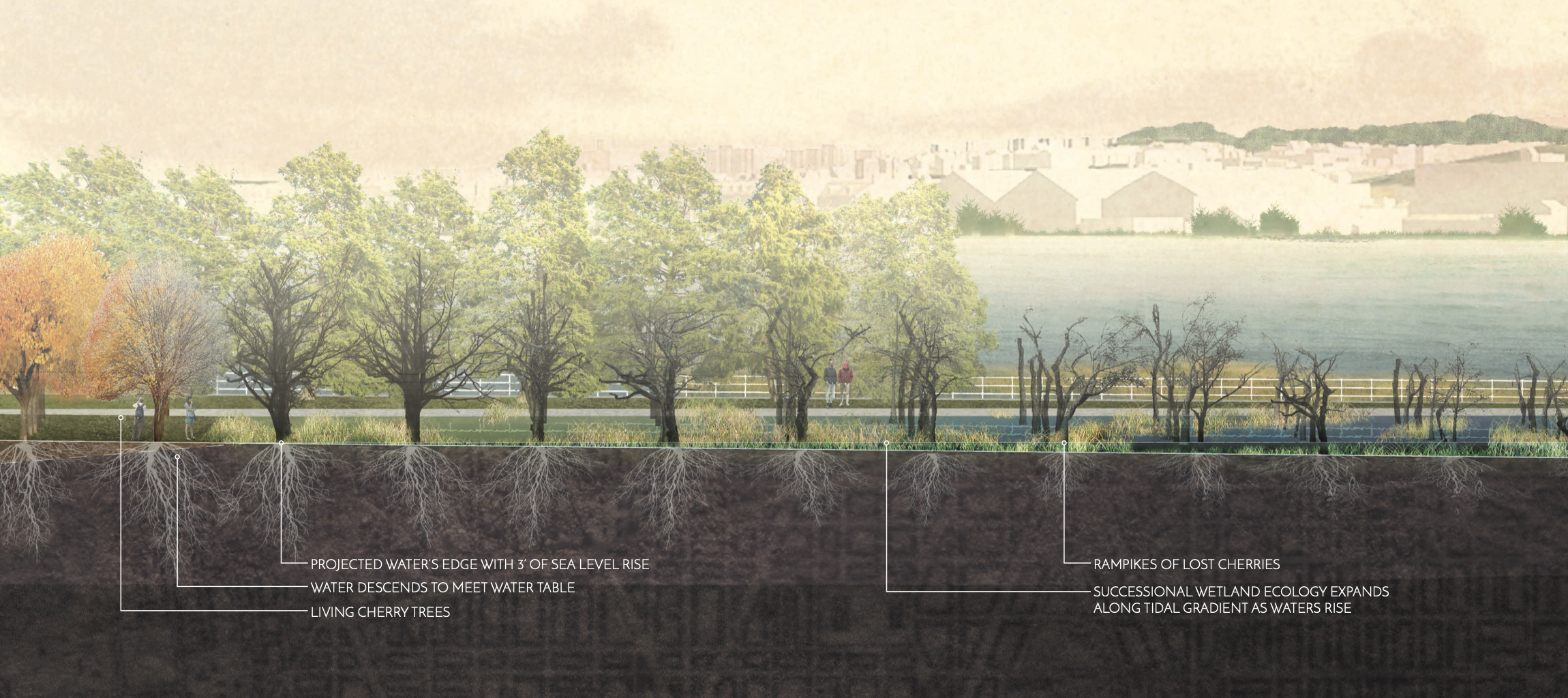
Proposed for Hains Point on the tip of today’s East Potomac Park in Washington, DC, Terrene worked with historic and projected sea level rise maps to propose a shift from investing millions in seawall damage improvements to creating a shoreline where citizens can participate in the linked fates of the climate and our species.
Images courtesy Terrene, see terrene.co for credits.
Stirring Our Senses
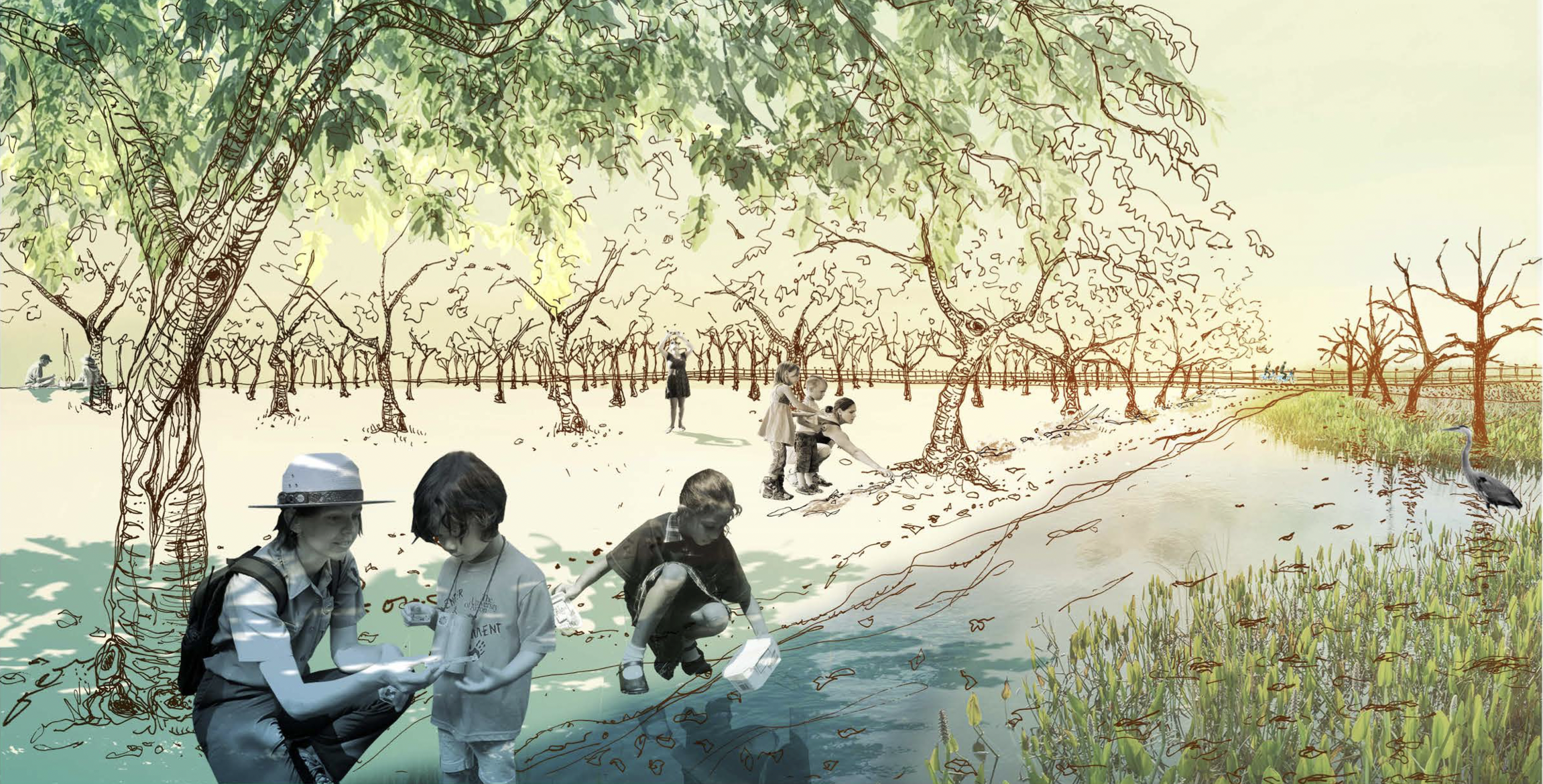
As water levels increase, a gridded grove of cherry trees flood on the sloped shore. Over time, they wither row by row in the salinated water, leaving sculptural carcasses delineating shorelines past. Rather than fortressing us from the effects of a changing climate, visitors are invited to interact, engaging viscerally with the changing habitat and the real effects of rising sea levels. This sensory interaction stimulates our parasympathetic nervous system to open collective resonance and deepen our interconnection with living systems.
By engaging with its unfolding evolution, we can feel wonder for and curiosity toward nature. These feeling states are known to release endorphins and enzymes like oxytocin in our bodies that stimulate openness, increase our compassion, engage our creativity and help us begin to shift our passive gaze toward active generosity.
Images courtesy Terrene, see terrene.co for credits.
How it Moves Us, Forward
We applaud Climate Chronograph for the poetic way that it seeks to put us back in touch with the world around us and nudges us to rethink what we call our attention to. May it inspire other creative approaches that engage our collective agency to imagine new possibilities for an abundance-oriented climate future.
Images courtesy Terrene, see terrene.co for credits.
Terrene
Terrene is Rebecca Sunter and collaborators. Rebecca was trained at UC Berkeley’s Masters of Landscape Architecture Program and the offices of Lutsko Associates, John Northmore Roberts & Associates, and Bernard Trainor’s Ground Studio. Before formal design education, she lived and worked on farms and ran a garden design/build operation specializing in edible and medicinal gardens. She has taught landscape design studios, hand drafting, and regularly sits on jury reviews at UC Berkeley. Her design competition work and collaborations have been awarded by the National Park Service, Van Alen Institute, National Capital planning Commission, National University of Singapore, University of California, Diablo Garden Club, and the Landscape Architecture Foundation.